Big Walk is a cooperative multiplayer adventure about teamwork and talking. Or at least, that's the first sentence on the Steam page for the game. I think this is accurate, but it hides the magic at the core of Big Walk somewhat. Sure, it's about talking, and it's a multiplayer co-op game. But the real heart of Big Walk, to me, is the group that you bring together to explore the world. The game itself is very neutral, which is a unique presentation in the gaming sphere. There is extremely little direction, guideposts, or indication of where to go and what to do. Despite this, the game masterfully pulls you through its world, shows you what you need to do, and teaches you and your friends an entirely new language of communication that you develop as you go.
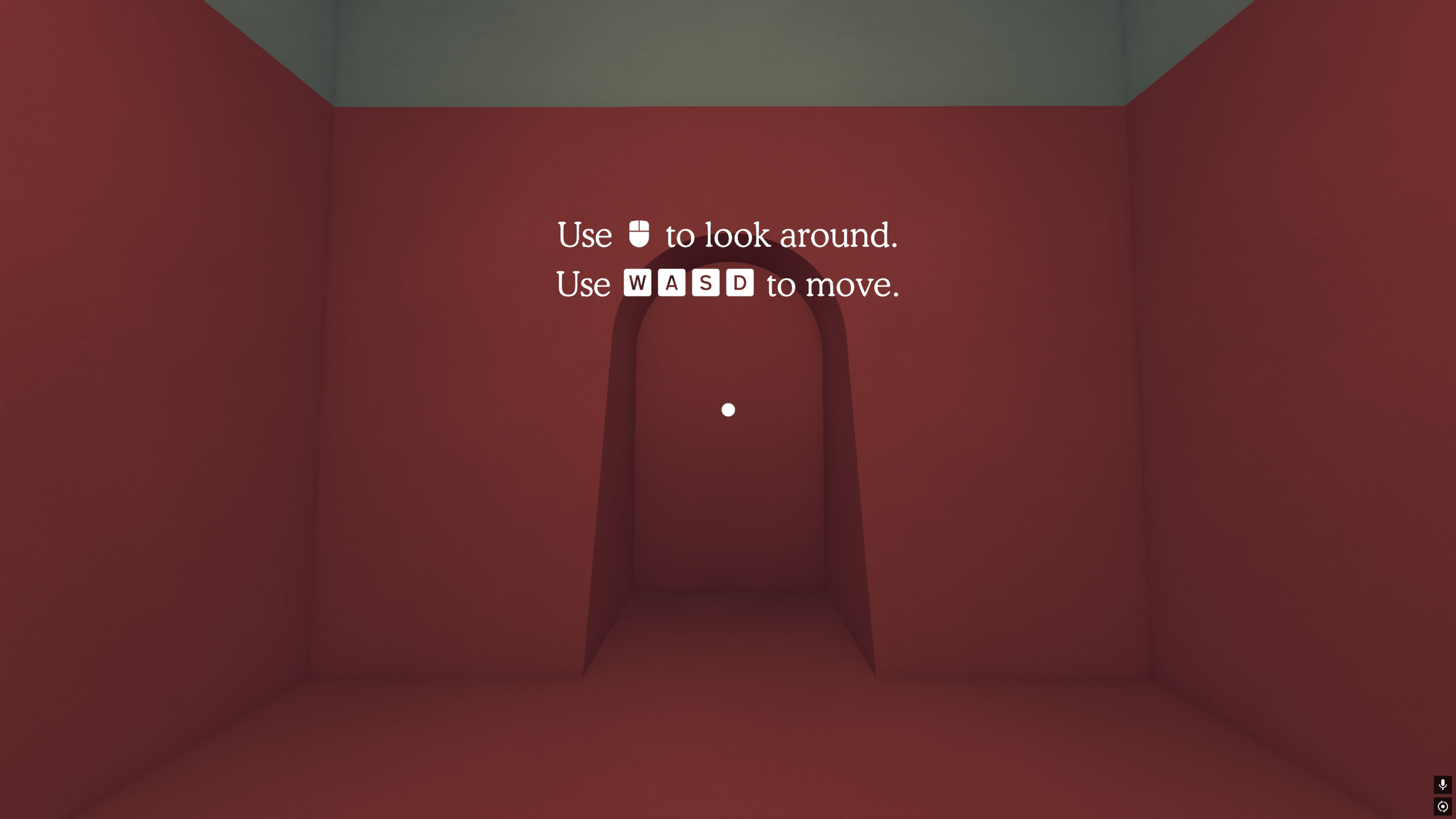
I want to take a second to analyze the tutorial area a bit. When you spawn in, you're immediately faced with a wall, and taught the basic movement controls. This forces you to actually practice with these controls and get used to them, as the only way to proceed is by walking down the hallway behind you when you spawn.
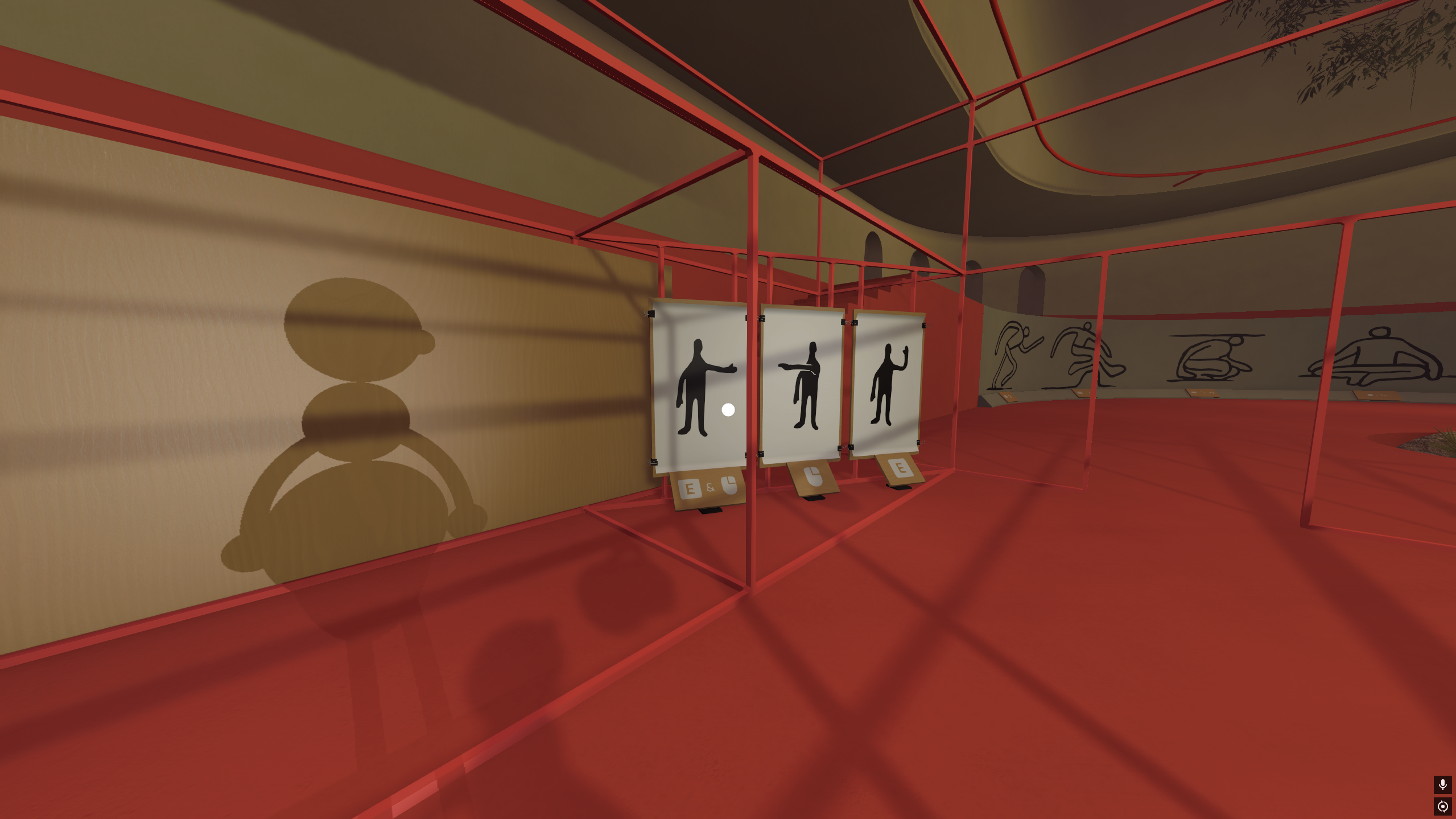
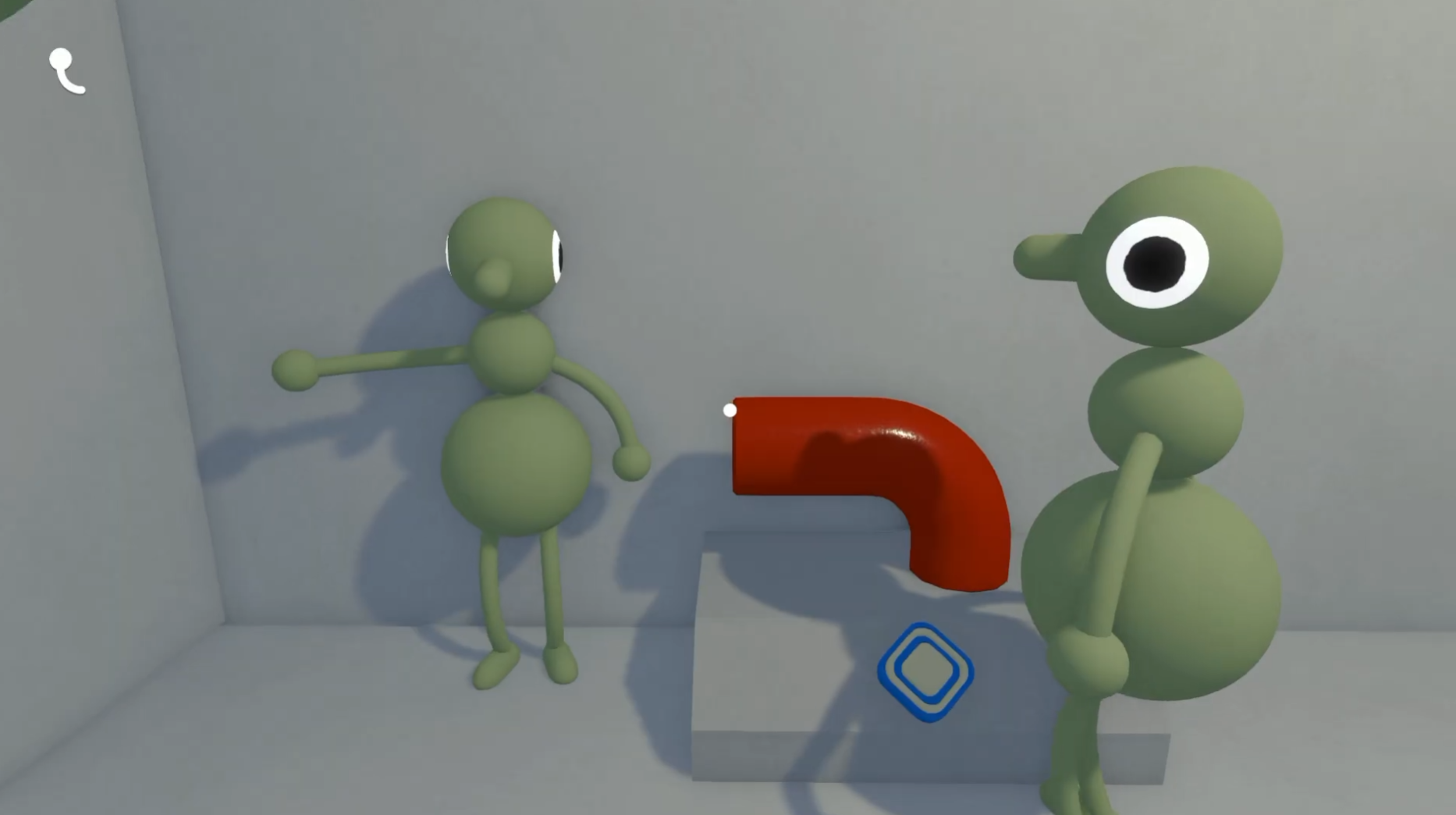
Every other tutorial is on an in-game sign, and requires you to actively choose to read it. This choice is emblematic of the design philosophy of this game: hand the player(s) a bunch of tools and see what they do with them. Speaking of the rest of the tutorial, it includes pictures and visual aids to help you learn — the game has a pantomiming system whereby pressing combinations of LMB, RMB, Q, and E, your character will raise, lower, and extend their arms in order to express… well, that's the problem. The game never tells you what anything means, and leaves it up to you and your friends to decide how to communicate most effectively. This becomes much more interesting and difficult as you get into the game's puzzles.
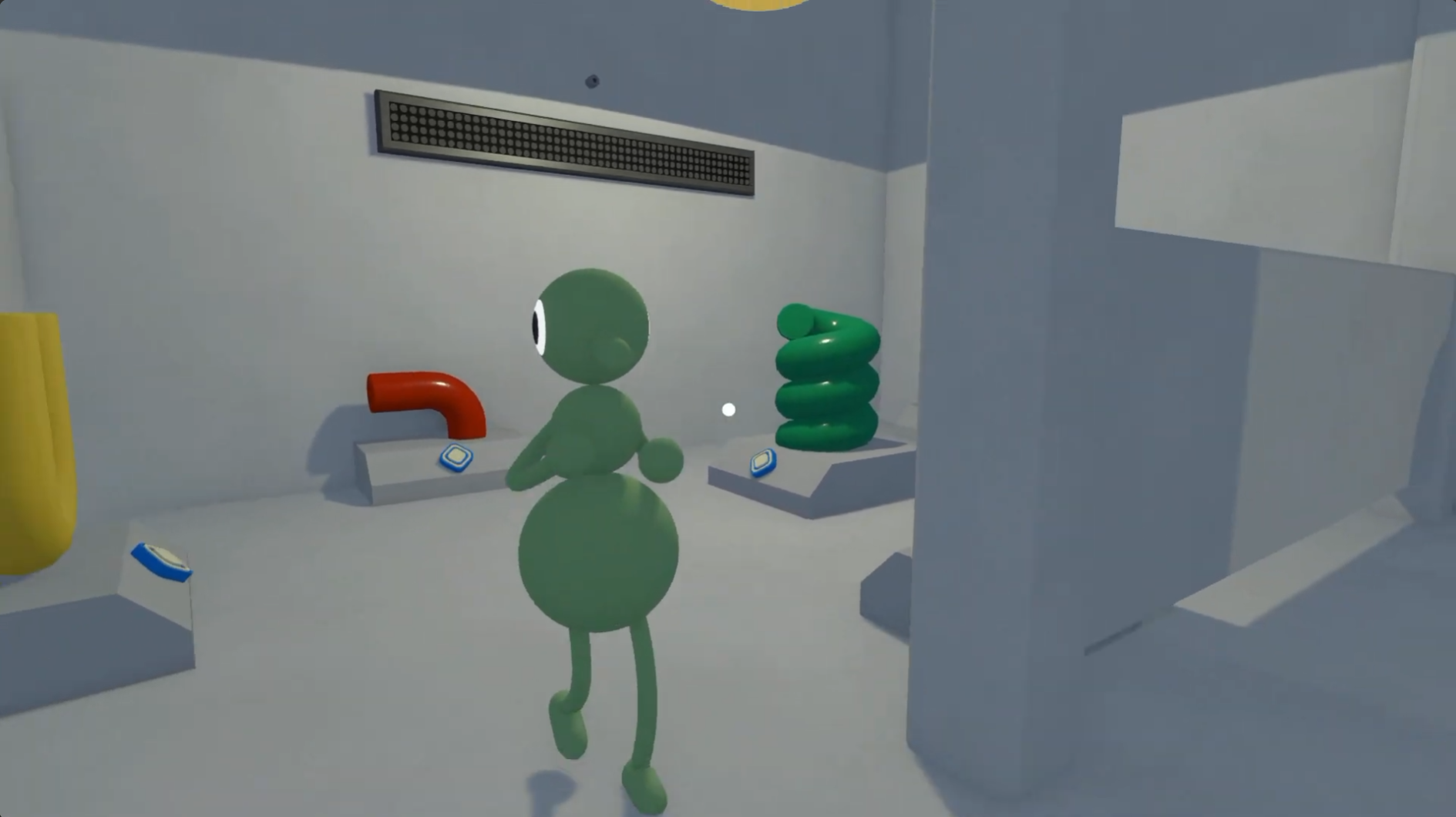
Progress in Big Walk is nebulous at first, but you quickly discover the way to move forward is by completing puzzles, taking their "globs" (every group calls the red items something different) to the relevant tower, and placing them inside, claiming the tower's key and unlocking a new feature for the island that makes getting around much easier.
The starting area sums up this mechanic well — it traps you in an area with 4 simple puzzles and won't let you leave until you've completed the respective tower. This opens up the entire rest of the game, and circles you back to the hub area where you started so that you can pick up from here anytime. This is when the game fully takes the training wheels off.
Let's talk about the puzzles. Most of the puzzles in Big Walk revolve around figuring out how to communicate with your friends while under some kind of restriction. One puzzle traps each team member in a "telephone" style scenario wherein each player can use an intercom to speak to only the next player in the loop of communication, but every player had to correctly organize pegs with symbols on them in the right order to solve the puzzle. Half of the puzzle is in figuring out what to do, and the other half is in figuring out how to do it with your friends.
I place emphasis on "with your friends" because, as I mentioned before, your group is really what makes Big Walk special. As I've been talking so far, I've effectively assumed that your group consists of focused, motivated logicians who are looking to complete the game as quickly and efficiently as possible. This is absolutely the worst group to play Big Walk with I can possibly think of. The game has downtime interspersed within each activity where you are actively expected to fuck around and goof off. There are items in the game for seemingly no reason other than to piss your friends off. Don't ask me about the flare guns. There are countless mechanics in-game to handle what happens when you inevitably get separated from someone and can't find them. The game expects you to get messy, and it's part of the experience.
This is where Big Walk shines, in my opinion. Everything can be going great until one of your friends decides now's a great time to dropkick the compass into the ocean. That's certainly going to be a setback, but it's never debilitating when something goes wrong — you can always muddle through or encounter more items to help you along the way.
The game is heavily built around the number of items you can carry, and teamwork is woven into that mechanic elegantly. Each player can only carry one thing at a time, and carrying something limits your visibility somewhat unless you carry it over your head. If you fall while carrying something, you drop it, so you have to be careful not to lose important items when travelling over great distances and heights.
Eventually, you encounter backpacks and belts on your journey that allow you to carry an additional item on your back, and certain items like walkie-talkies and the map on your waist. This effectively triples your group inventory once fully kitted, and this progression is central to working your way through the game.
There are a couple moments I want to highlight from my first experience playing Big Walk, and I want to introduce briefly my group. There was myself, Jeff, Moth, and Graydon who shared the journey together. In short, Moth and I were the most focused and task-driven, while Jeff and Graydon would sometimes get lost along the way or goof around while trying to puzzle-solve.
I bring this up so I can tell a few stories. One puzzle involved several pedestals with a kind of button we had all seen before — one where we all need to press them all at the same time. The catch was that each pedestal was about 3 football fields away from each other, and we were missing a walkie-talkie (3 radios, 4 players). We decided to split up and attempt to signal each other, but this process broke down several times along the way. I actually don't know the most about the specifics since it was my job to stand at the first platform and wait for everyone to get in position. This was a significant test of patience. I think, all told, it took over a half hour for us to figure that one out. Graydon and Jeff were the last two in the chain, and I think there was miscommunication about who was supposed to be "starting" the button presses. This was easily the lowest point of the entire game for me, but I still think there's value in that experience. Big Walk presented us a world, and we chose to attempt a puzzle we weren't prepared for and muddled through anyway, charting our own course through it all. This really exemplifies Big Walk's design philosophy of creating a world to play and explore in freely.
One of my favorite experiences in the game was the finale. Once you've completed all of the towers (including the ominous black tower), you get the final key to unlock the extremely gigantic conspicuous wall that's been taunting you for the whole game. After you cross through, you enter the gigantic black orb that's similarly been taunting you the whole game, and encounter the game's final gauntlet of puzzles. These puzzles all rely on mechanics and items that you must have seen before in order to have made it to this point, and they all include one major twist — you can no longer talk to each other or distinguish between your friends. All of a sudden, you all have to act as perfect silent cogs in a puzzle-solving machine. This sounds like a gigantic pain, but it's actually the most fun I had with the entire game, and it's not JUST because I could finally hear myself think. Each of these puzzles was a twist on something we'd seen before, be it the tomato timers you need to deposit before they break, or buttons you all need to hit simultaneously, or soundproofed rooms and picture cards to get in order.
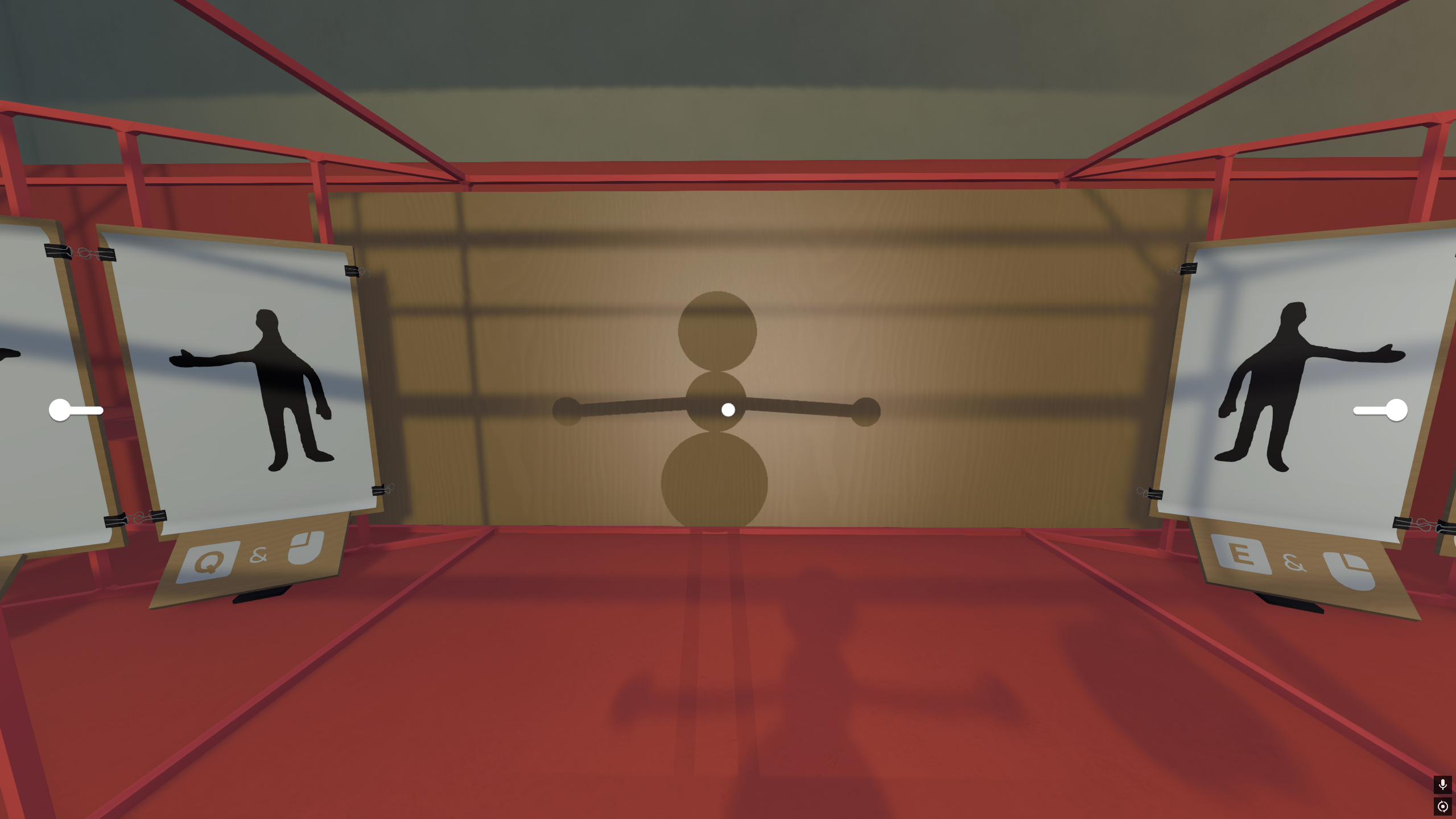
My favorite of all of these was a puzzle where, in two opposite rooms, the same set of abstract sculptures are displayed. Players need to relay WHICH sculpture to press the respective button for, from the indicator side to the button side through two players trapped in rooms where they can't see the symbols.
Note in the second picture the player holding their arms out to mimic the shape.
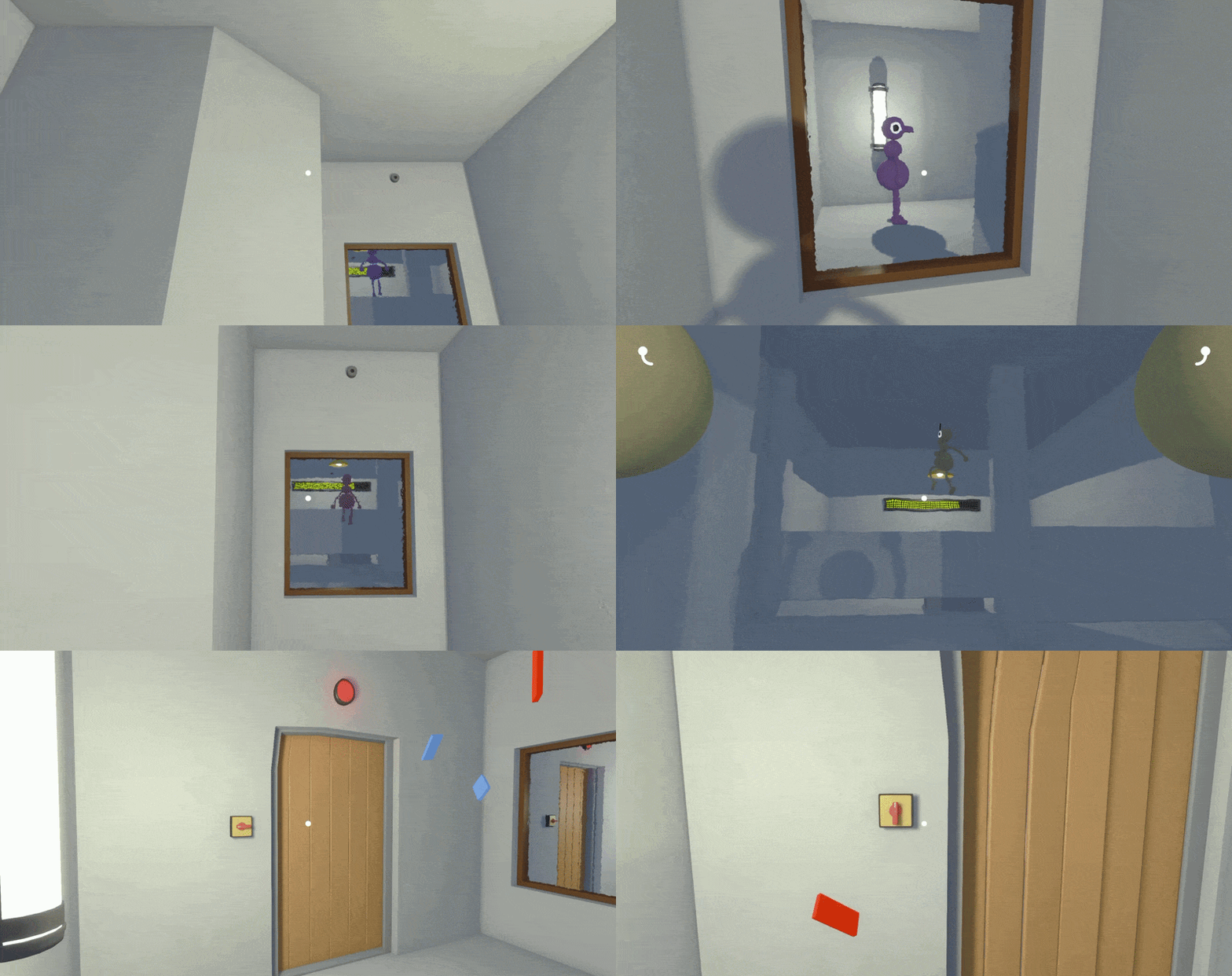
A GIF of this puzzle illustrates a player pantomiming the shape, the POV player receiving and sharing the same shape, and the receiving player inputting the correct button. What I want to draw special attention to is the way the game artfully facilitates nonverbal communication — all players have to decide on a miming scheme that makes sense for the shapes available, and House House specifically chose the shapes they did to complement the miming tools that are available to the players. This design creates a bit of friction in the form of the mandated silence, but is mainly streamlined for the players to discover and develop their own strategy while it's still a strategy House House intended you to use. In this sense, it's actually quite like lesson planning, where you introduce and build on a concept, followed by an assessment of skill (in this case, the black sphere puzzles at the end of the game).
Keeping the classroom analogy for a moment, there's one last moment I want to put a spotlight on. Once you've fully completed the game (spoiler alert), you actually enter a room where you get given what I can only describe as homework. The game explicitly requests you (not requires, requests) to sit down and share a memory from your time with the game. Yes, that's right — they put a discussion board post in the game. I promise you, in any other game I've played this year, maybe ever, if they did this, I would just close the game, honestly. It's pretty corny in a vacuum, but after all the experiences I shared with my friends in the world of Big Walk, I actually wanted to hang on for just another moment before saying goodbye. I will honestly say I cried during the ending of Big Walk. It really is a unique experience that you share with the people you bring along, and I had such a wonderful time that I wanted to share some of that joy in my review. I cannot encourage you enough to pick up this game. I guess the only caveat is that you absolutely need a good group to play with, but assuming you've got that covered, this is absolutely my GOTY 2026 so far, possibly period.